7 Rules for Trading Meme Coins Without Losing Your Capital
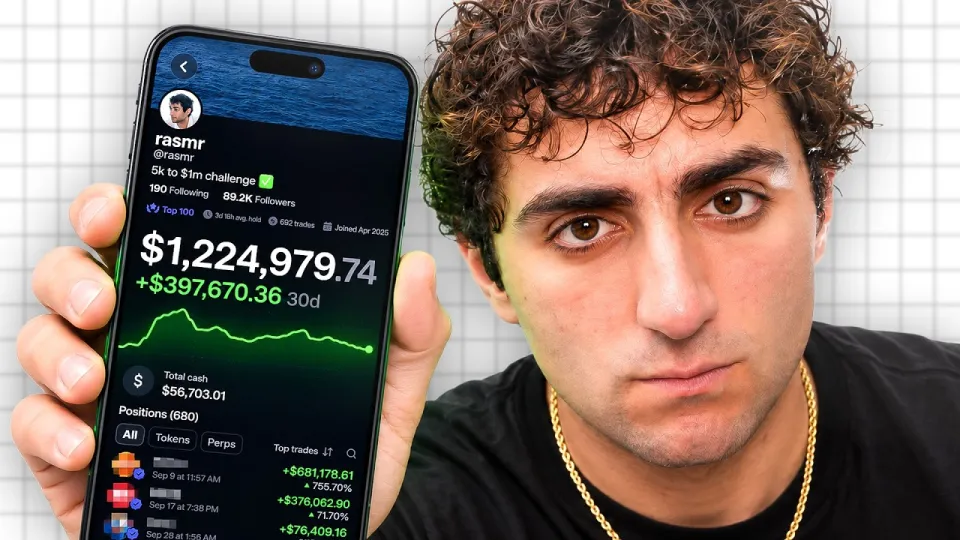
Video: 5 Years of Memecoin Knowledge in 12 Minutes
You can order the same kind of articles for your own video to boost it on YouTube and Google. Just message the Telegram bot @sat_sit_bot. The bot writes and publishes the articles itself (with your YouTube video embedded) on popular topical websites (no ads). Try it free: 50 articles on us.
· based on the channel rasmr
Key takeaways
- Meme coins are narrative-driven tokens with no cash flow, so price is set by attention and liquidity, not fundamentals.
- Most retail losses come from round-tripping unrealized profit and averaging down on a losing position out of hope.
- Position size should be money you can lose entirely; the average meme coin outcome is zero.
- Exit plans are set before entry: partial sells on the way up beat one all-in sell at the top.
- Checking who launched a token and who holds the supply matters more than the chart pattern.
A meme coin is a crypto token whose price is driven almost entirely by attention, narrative and liquidity rather than by revenue or cash flow — which means trading it is a risk-management discipline, not an investing one. The practical answer is simple: size every position as money you can lose, decide your exits before you buy, and treat emotion as the main enemy. The breakdown below follows the framework popularized by the rasmr channel in its 12-minute retrospective on five years of meme coin trading; if you want to trade alongside that workflow, you can register on FOMO through the rasmr referral link.
What actually moves a meme coin price
A meme coin has no earnings, so its price is a function of attention, liquidity and the behavior of the largest holders. That is why a token can go from a few hundred thousand dollars of market cap to tens of millions in hours and back to near zero in the same day. The three inputs that matter are the narrative (why people are buying right now), the float and holder distribution (how much supply sits with insiders), and the depth of liquidity (how much you can sell without moving the price against yourself). When any of those three weakens, the chart usually follows — not the other way around. Traders who watch the chart alone are effectively watching the shadow instead of the object casting it.
5 steps to enter a meme coin position properly
These are the five steps that separate a planned entry from a gamble, and each one can be checked in minutes before you click buy.
- Identify the narrative. Ask what story the token is selling and whether that story is fresh. A token riding a trend that is already three weeks old is competing with thousands of copies for the same attention.
- Check who launched it and who holds the supply. If a small cluster of wallets received large allocations before the public launch, your exit liquidity is their profit.
- Look at liquidity, not just market cap. A $5 million cap with $40,000 of liquidity is a trap: your sell order will crater the price.
- Size the position as a loss. Decide the amount you are fully prepared to see go to zero, and never fund that position with borrowed money or rent money.
- Write the exit before the entry. Set a target where you take initial capital out, a target where you take partial profit, and a hard invalidation level where you admit the thesis is dead.
Why emotions cost more than bad picks
The most common way meme coin traders lose money is not picking the wrong token — it is holding a winner too long and a loser too long at the same time. Two patterns repeat constantly. The first is round-tripping: a position shows 50% or 100% unrealized gain, the trader gets greedy waiting for more, and the whole move reverses back to entry. The second is hope-holding: a position drops, the trader refuses to take a loss and waits for the chart to recover, often adding more capital to average down. Both come from the same root — the position size is large enough that the loss hurts emotionally, which is precisely why sizing has to come first. A trade you can afford to lose is a trade you can close rationally.
How to build an exit plan that survives a pump
An exit plan is a pre-committed schedule of sells that removes the decision from the moment of maximum excitement. The workable version has three layers: at the first meaningful multiple, sell enough to recover your initial capital so the rest of the position is running on house money; at the next target, sell another tranche regardless of how strong the momentum feels; and keep a trailing rule for the remainder so a parabolic move is not given back entirely. The key property of this structure is that it forces partial profit-taking while the price is still going up, which is the only time selling feels wrong. Waiting for a single perfect top is a strategy that works in hindsight and almost never in real time.
Questions traders ask before their first buy
Beginners tend to ask the same handful of things, and the honest answers are uncomfortable. On the question of whether a coin can "rug" — pull liquidity or dump insider supply — the answer is that it can, and the check is structural: look at how concentrated the supply is among early wallets and how much of the liquidity is locked or controlled by one address. On whether a token tied to a big upcoming event, such as a major game release, is a good investment, the answer is that the event is already priced in by the people who bought before you; you are buying the exit of earlier holders unless you have a reason to believe attention will exceed expectations. On starting with small capital, the right approach is to treat the first months as tuition: trade small, record every entry and exit, and judge yourself on process rather than on one lucky win. And on the recurring idea that there is an inner circle that gets launch information early — that is exactly why chasing a token after it is already up several hundred percent is a structurally bad entry.
The risk checklist before every trade
A checklist turns vague caution into a repeatable filter, and it takes about two minutes to run. Confirm the token's narrative is current rather than stale. Confirm the top wallets do not hold a share of supply that lets them end the chart on a whim. Confirm liquidity is deep enough for your position size to exit without massive slippage. Confirm your own numbers: entry, first partial sell, invalidation level, and the maximum dollar amount you accept losing. If any one of those checks fails, the trade does not happen — and skipping a bad trade costs nothing, while taking it can cost the whole position. Traders who survive multiple cycles are not the ones with the best calls; they are the ones who consistently refuse the setups that fail the checklist.
Useful links
- FOMO registration via the rasmr referral link — the trading platform referenced in the video.
- Catalyst trading Discord community — the trading group linked by the channel.
Final thoughts
The core lesson from five years of meme coin trading fits in one sentence: the edge is not in finding the next hundred-x token, it is in surviving the ones that go to zero. Size positions as losses, take profit in tranches while the chart is still green, and never let hope make a trading decision for you. The rasmr channel condensed that experience into a compact 12-minute breakdown, and it is worth watching as a checklist rather than as a promise of returns. If you want to put the framework into practice, start through the FOMO sign-up link from rasmr and keep your first positions deliberately small.
Questions & answers
What is a meme coin in simple terms?
A meme coin is a cryptocurrency whose value comes from community attention and narrative rather than from revenue, products or cash flow. Its price is set by how many people want to buy it at a given moment and how much liquidity exists to sell into. That makes it a trading instrument with very high risk, not a long-term investment.
How do I know if a meme coin is likely to rug?
Look at supply concentration and liquidity control rather than at the chart. If a small group of wallets received large allocations before the public launch, or if one address controls most of the liquidity, those holders can end the chart whenever they choose. A token with a large market cap but thin liquidity is also a red flag, because your exit will move the price sharply.
Should I sell at a loss or wait for the price to recover?
Decide this before you enter, not after the price drops. If the reason you bought the token no longer holds, waiting is hope rather than a strategy, and averaging down usually increases the damage. A pre-set invalidation level removes the emotional decision from the worst possible moment.
How much capital should a beginner put into meme coins?
Only an amount you are genuinely prepared to lose entirely, because the most likely outcome for any single meme coin is zero. Small size lets you stay rational, take partial profits without regret and keep trading after a bad week. Position sizing is the single biggest difference between traders who last several cycles and those who do not.
Source: 5 Years of Memecoin Knowledge in 12 Minutes · Markdown version